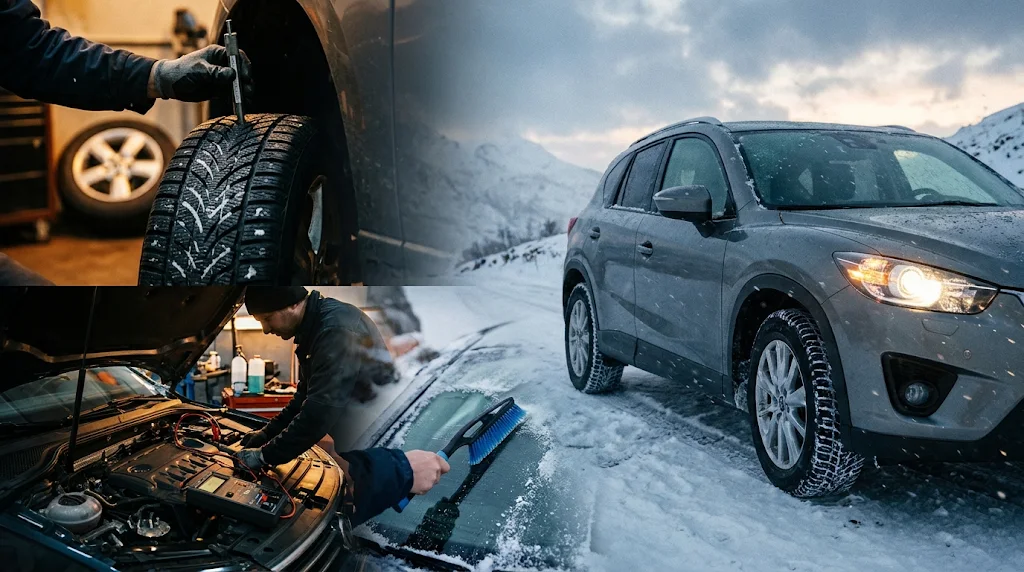
How to winterize your vehicle before freezing temperatures hit
A practical guide to keeping your car reliable, safe, and rust-free throughout the coldest months.
Every driver knows that winter driving feels completely different from cruising on dry summer asphalt. Freezing rain, sudden snowfall, sub-zero cold snaps, and black ice turn ordinary morning commutes into demanding endurance tests for both driver and machine. Yet, every single year, thousands of motorists get stranded on roadsides simply because they assumed their vehicle was ready for the freeze.
Winterizing your vehicle is not just about mounting seasonal tyres. It is a holistic mechanical checkup designed to prevent costly breakdowns and maintain full control when traction disappears.
Here is everything you need to inspect, adjust, and protect before winter weather arrives.
Start with your tyres: tread depth and air pressure
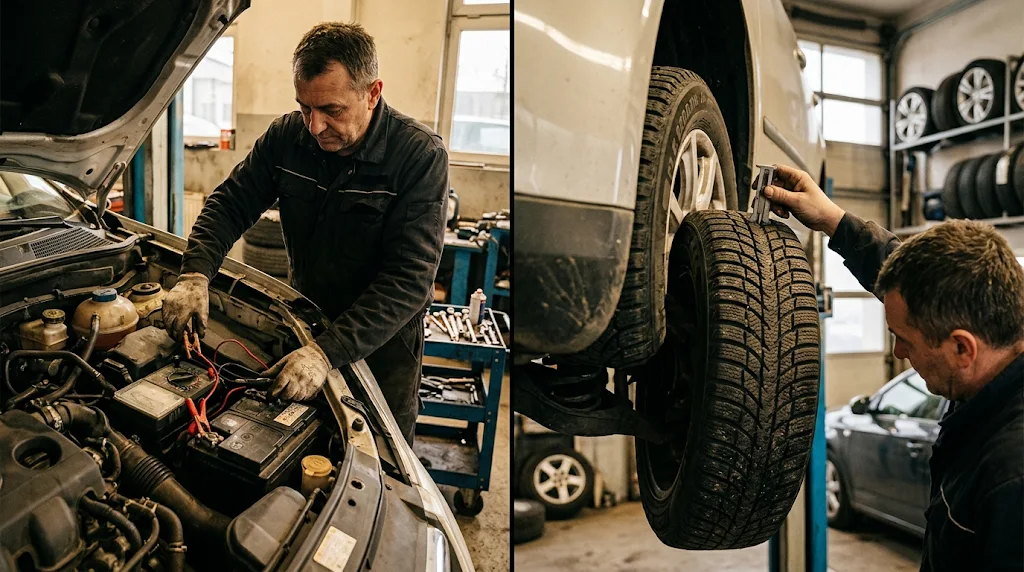
Tyres represent the single physical contact point between your car and a slippery road surface. While many regions have minimal legal requirements for tread depth (often 3 to 4 millimetres in Europe, or 2/32 of an inch in parts of North America), real-world experience shows that driving on legal minimums during winter is hazardous.
Automotive service specialists, such as technicians at Oriskany Garage in central New York, strongly advise against running on worn rubber. A practical recommendation is maintaining a tread depth of at least 6/32 of an inch (roughly 4.8 millimetres) before cold weather sets in. In simple terms: aim to have at least half of the original tread life remaining on your winter or all-weather tyres before you encounter deep slush or snow.
Why does this matter? Sipes and deeper grooves channel away slush and melting ice. Once that depth wears down, your tyres hydroplane over semi-frozen slush rather than gripping the tarmac.
Do not overlook inflation levels, either. As ambient air temperature drops, tire pressure falls naturally – roughly 1 PSI for every 5 to 6 degrees Celsius (10 degrees Fahrenheit) decrease in temperature. Regularly check all four tyres, plus your spare, using a reliable digital gauge when tyres are completely cold.
Test your battery capacity before freezing mornings strike
Have you noticed your starter motor cranking just half a second slower over the past couple of weeks? If so, treat that as an early warning.
Car batteries rely on chemical reactions to generate electrical current. Severe cold slows these reactions down, robbing your battery of up to 30% to 50% of its cranking power when temperatures drop below freezing. Simultaneously, cold, thickened engine oil requires significantly more energy to turn over.
Instead of waiting for a quiet clicking sound in a frozen driveway, have your battery professionally load-tested. Dedicated testing equipment measures cold cranking amps (CCA) and internal resistance to determine whether the battery still holds adequate reserve capacity. Furthermore, inspect terminals for corrosion, wipe away built-up grime, and verify that cable connections remain tight.
Visibility: windshield wipers and cold-rated washer fluid
Wiper blades take heavy abuse during winter. Sleet, icy crusts, and road grime quickly degrade delicate rubber edges. If your blades leave streaks, squeak across the glass, or skip over sections of your windshield, install a fresh set immediately. Winter-specific wiper blades come with reinforced rubber boots that prevent ice from packing inside the frame hinges.
Pair fresh wipers with proper winter washer fluid. Standard summer fluids consist primarily of water and mild detergents that freeze solid inside lines and nozzles as soon as the temperature dips below zero. Swap to a fluid rated for at least -20°C (-4°F) or colder, and run the pump long enough to flush any leftover summer mixture out of the delivery hoses.
Wash off road salt: protecting the underbody from rust
Highway departments rely heavily on rock salt and chemical de-icers (such as calcium chloride and magnesium chloride) to keep roads passable. While necessary for traction, these compounds form a corrosive brine that clings aggressively to wheel arches, brake lines, suspension components, and chassis seams.
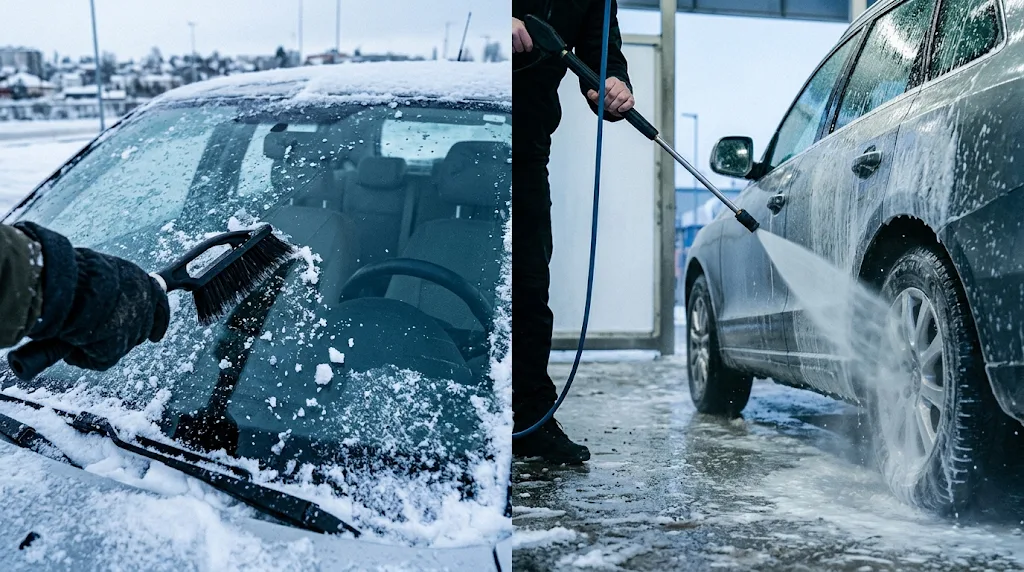
To prevent structural oxidation, wash your vehicle thoroughly at least once a week during active snow seasons. Pay special attention to underbody wash bays that blast away salt deposits from hard-to-reach crevices.
Applying a specialised undercoating or corrosion inhibitor (such as oil-based or lanolin-based rust treatments) prior to the first snowfall creates a physical barrier that prevents brine from reaching raw metal.
Essential fluids and mechanical checks
Beyond tyres, batteries, and wipers, complete your winter prep with these key maintenance items:
- Coolant and antifreeze strength: Verify with a hydrometer that your coolant mixture can withstand the lowest anticipated temperatures in your area. Antifreeze also lubricates your water pump and inhibits corrosion inside the cooling passages.
- Engine oil viscosity: Thicker multi-grade oils become sluggish in freezing weather. Consult your vehicle manual to see if a lower winter viscosity (such as 0W-20 or 5W-30) is recommended for easier cold starts.
- Brake system check: Uneven brake pad wear or sticky callipers cause vehicles to pull to one side – a minor annoyance on dry roads, but an immediate skid risk on icy highways.
- Door seals and locks: Coat rubber door gaskets with silicone spray to prevent doors from freezing shut after winter rain.
Pack a dependable winter emergency kit
Even well-prepared vehicles can face highway closures or unexpected skids. Always store a dedicated winter kit in your boot:
- Jumper cables or a compact lithium jump-starter pack
- Sturdy ice scraper and long-handled snow brush
- Collapsible snow shovel and a bag of sand or non-clumping cat litter for traction
- Warm fleece blanket, spare thermal gloves, and a woollen hat
- High-lumen torch (flashlight) with extra batteries
- High-calorie non-perishable snacks and bottled water
- First aid supplies and high-visibility vest
Adjust your driving technique
Mechanical preparation provides the foundation, but safe driving habits complete it. Increase following distance to three or four times normal spacing, brake gently and well in advance of turns, and avoid cruise control on damp or frosty bridges. Slowing down remains the most effective safety feature on any vehicle.