Wildfires in Serbia: Firefighters Battle Blazes Across the Country
Wildfires Continue to Challenge Serbia
Serbia is facing a demanding period of wildfire activity, with numerous fires burning across different parts of the country. As of 7 September 2026, authorities reported 34 active wildfires in open areas, while firefighters and emergency services continued operations at several major locations.
The situation is particularly challenging because several fires are burning in mountainous and difficult-to-access terrain, while strong winds and dry conditions can quickly change the direction and intensity of the flames.
Suva Planina Among the Most Critical Areas
One of the most serious current fires is burning on Suva Planina in southeastern Serbia. The fire, which began on 4 September, has spread across several parts of the mountain range.
The most active area is around Devojački Grob, at approximately 1,300 metres above sea level. Flames have also reached the area around Trem, the highest peak of Suva Planina, at 1,810 metres. More than 170 firefighters and other emergency personnel, supported by 46 vehicles and three helicopters operated by the Serbian Ministry of Interior, are involved in the firefighting operation. Forestry workers, members of the Mountain Rescue Service, volunteer firefighters and local residents have also contributed to the response. Fortunately, authorities have reported no fatalities or injuries and no immediate threat to residential or auxiliary buildings in the affected area.
Fires in Deliblato Sands and Eastern Serbia
Another important area affected by fire is Deliblato Sands, one of Serbia’s most valuable natural areas. The fire there has been particularly difficult to manage because wind can rapidly reignite previously controlled areas.
The reserve suffered significant wildfire damage earlier this summer. International assistance was also provided during the major firefighting operations, including firefighters, vehicles and aircraft from several European countries, while a Russian Ilyushin firefighting aircraft was also deployed.
On 7 September, strong winds contributed to the reactivation of fire in parts of Deliblato Sands, demonstrating how difficult it can be to completely eliminate underground and hidden hotspots.
Fires are also active in the Majdanpek area, where crews are battling flames affecting forests and low vegetation.
Difficult Terrain Makes Firefighting More Complicated
Mountain fires present a particular challenge for emergency services. In some areas of Suva Planina, steep slopes, a lack of roads and limited access to water make it extremely difficult for firefighters to reach the flames from the ground.
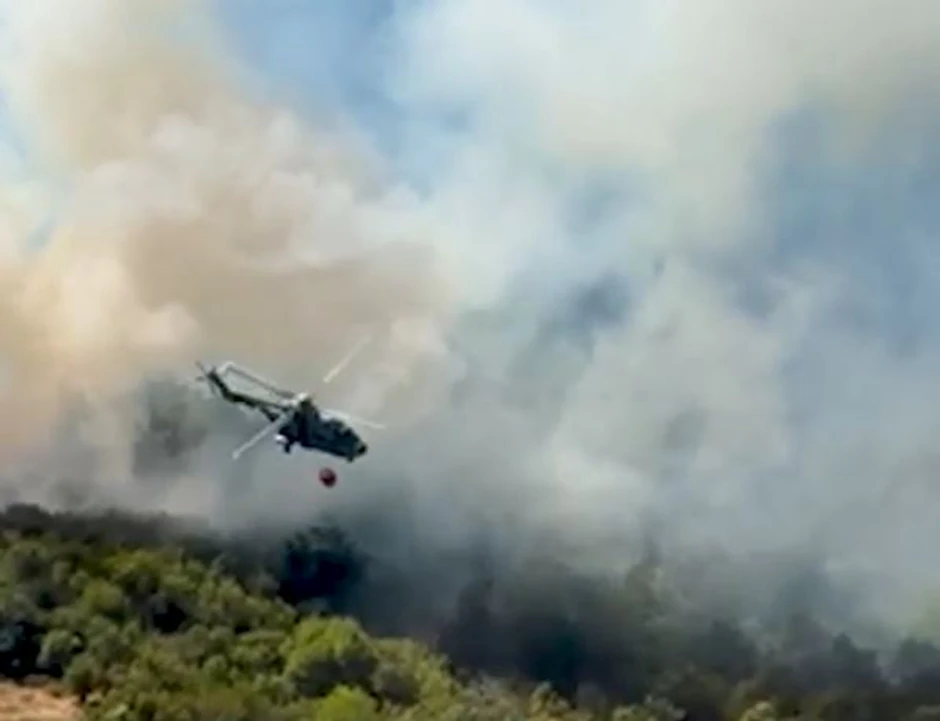
For this reason, aerial firefighting has become an important part of the response. Serbian helicopters have been deployed to areas where ground crews cannot safely reach the fire, while aircraft have also been used during the wider firefighting campaign.
The combination of dry vegetation, high temperatures, strong winds and difficult terrain creates conditions in which relatively small fires can develop rapidly.
A Summer of Serious Wildfire Activity
The current situation follows a summer marked by several major wildfires across Serbia.
Among the most significant incidents were fires in Deliblato Sands, Stolovi, Goč and the area around Vranje. In August, the Serbian government reported that 35 wildfires were active across the country. International assistance was mobilized through the European Union Civil Protection Mechanism, with firefighting teams and helicopters from several European countries participating in operations. The fire on Stolovi Mountain near Kraljevo, which began in early August, was eventually localized after an extensive operation involving more than 300 firefighters and rescuers, as well as helicopters and international teams.
The Importance of Protecting Serbia’s Forests
Wildfires can have consequences that extend far beyond the immediate destruction caused by flames. Forest ecosystems can take decades to recover, while soil erosion, loss of biodiversity and damage to wildlife habitats may continue long after a fire has been extinguished.
This is particularly important in protected natural areas such as Deliblato Sands. Recent analysis of the damage there has highlighted the need for long-term ecological restoration and improved forest management as Serbia faces increasingly frequent and severe fires.
Prevention Is Everyone’s Responsibility
Although emergency services play the central role in fighting wildfires, prevention remains one of the most effective ways to protect people and nature.
During periods of elevated fire risk, residents and visitors should avoid burning vegetation, throwing cigarette butts into dry grass, leaving fires unattended or using open flames near forests and dry vegetation. Any smoke or uncontrolled fire should be reported to the emergency services immediately.
Serbia Faces Another Difficult Fire Season
The latest fires are a reminder that wildfire prevention and preparedness are becoming increasingly important in Serbia. The combination of changing weather patterns, prolonged dry periods and strong winds can create extremely dangerous conditions.
Firefighters, volunteers, forestry workers, rescue teams and local communities continue to work together to protect people, homes and Serbia’s natural landscapes.
As the latest operations demonstrate, early detection, responsible behaviour and rapid intervention can make the difference between a manageable fire and a major disaster.